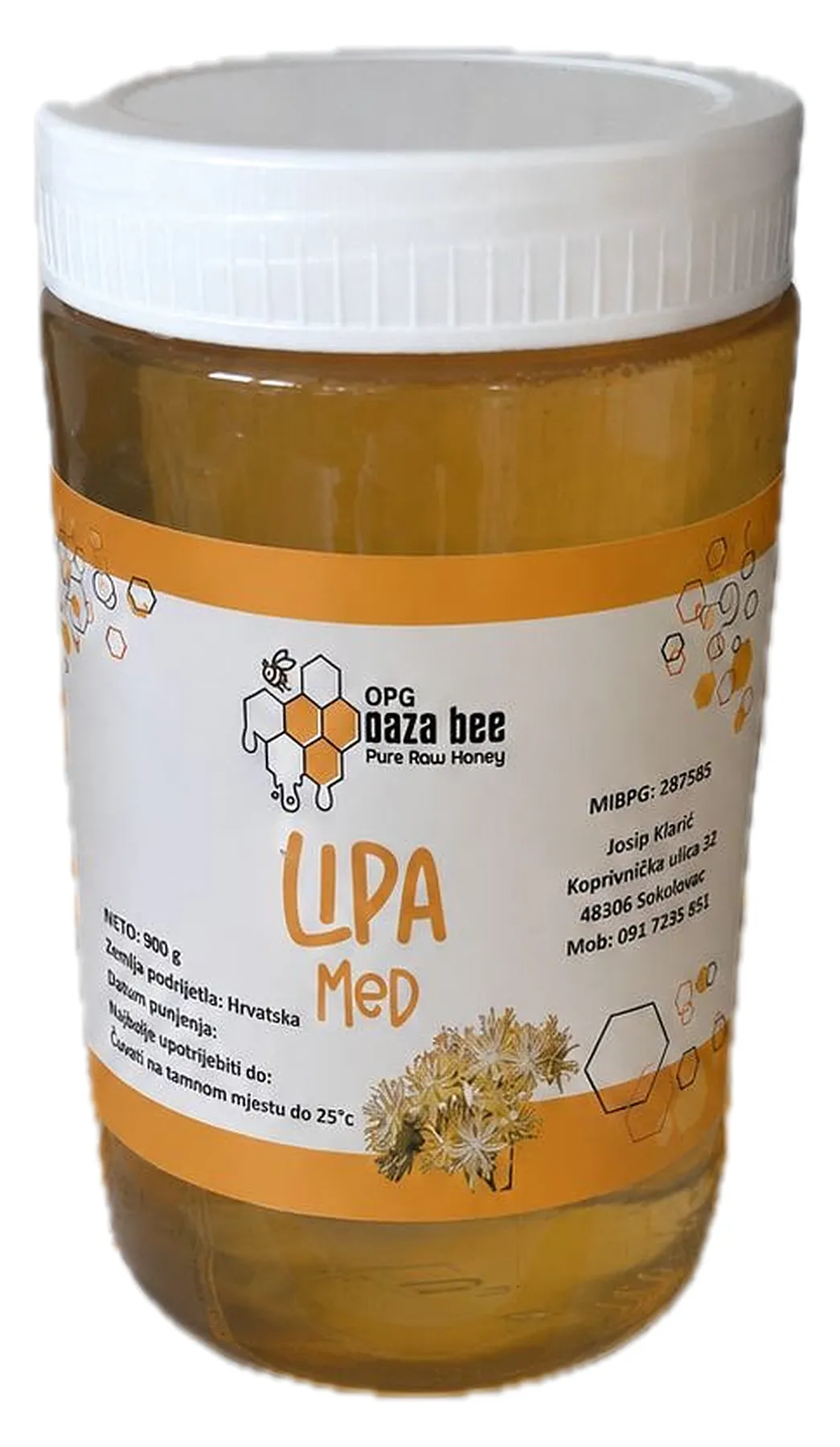
Linden honey: flavour, aroma, crystallisation and uses
How to recognise linden honey, what it tastes and smells like, when it crystallises, and how to use it at breakfast, in tea, cooking and gifts.
By AndrejaPublished 3 min read
You often recognise linden honey before you taste it. Open the jar and the scent recalls linden blossom, dried herbs and freshly brewed tea. In our family, we do not reach for it when we want honey to stay quietly in the background. We choose it when we want to notice the honey in the meal.
How linden honey is made
Linden trees flower briefly and intensely, usually in early summer. When the weather is kind and enough trees are flowering around the hives, the bees can gather nectar in which linden provides the main character. Rain can wash nectar from the blossom, while strong heat can shorten flowering, so both the crop and the strength of the aroma vary each year.
The beekeeper chooses where the hives stand and when to extract, but cannot order perfect weather. That is why two linden harvests need not be identical. Our article on bee forage through the year explains how each flowering period finds its way into the jar.
Flavour, scent and colour
Linden honey is usually pale yellow to amber. Its scent is pronounced, floral and herbal, while the flavour is fresher and more assertive than acacia honey. A lightly astringent note may appear at the end and gives the variety its recognisable character.
We find comparisons useful: acacia honey is quiet and delicate, chestnut is dark and bitter, and linden is aromatic and fresh. If you are just discovering the differences, our guide to honey varieties sets out their main features side by side.
Why it crystallises
Crystallisation is a natural property of honey. Linden honey usually sets sooner than acacia, but the pace depends on the balance of natural sugars, storage temperature and tiny pollen particles in the honey. One jar may become finely creamy, while another develops slightly larger crystals.
Neither texture means the honey is spoiled. If you prefer it softer, place the closed jar in warm, not hot, water and let it soften slowly. There are fuller instructions in our guide to honey crystallisation.
How we use it at home
- At breakfast. On bread and butter, in yoghurt or over porridge.
- In tea. Especially when we want the honey’s aroma to stand up beside herbal or black tea. We let the drink cool a little first.
- With cheese. It works well with young cow’s-milk cheese and milder hard cheeses.
- In cooking. In salad dressings, marinades or as a final sweet note over roasted vegetables.
Our simple kitchen rule is to add it near the end when its scent matters. We explain the practical reasons in can you put honey in hot tea?.
Choosing a jar
Look for a clearly named variety, producer and country of origin. Colour alone is not enough because it changes with the season, but the scent and taste should carry a recognisable linden character. Crystallised honey is not inferior or necessarily old; it has simply changed texture.
Our linden honey comes from our own hives in Sokolovac. When customers ask who it suits, our answer is straightforward: someone who enjoys an aromatic honey that will not disappear in a cup, breakfast or recipe.
In short
Linden honey sits between very mild and very powerful varieties. It has a distinct floral-herbal scent, a fresh flavour and a natural tendency to crystallise. That character makes it a useful jar for the table, the kitchen or a gift for somebody keen to discover more than one kind of honey.
Questions and answers
What does linden honey taste like?
Linden honey has a pronounced floral aroma, a fresh herbal note and a lightly astringent finish. It is stronger than acacia honey but usually not bitter like chestnut honey.
What does linden honey smell like?
The scent of genuine linden honey recalls linden blossom, dried herbs and freshly brewed tea. Its intensity varies from season to season because flowering and weather are never identical.
Does linden honey crystallise?
Yes. Linden honey crystallises naturally, usually sooner than acacia honey. Its crystals may be fine or slightly coarser, and their appearance does not mean that the honey has gone off.
How can I use linden honey?
Spread it on bread, spoon it over oats or yoghurt, use it in dressings, or add it to tea after the drink has cooled a little. Its distinct aroma also pairs well with mild cheeses.