Meadow or wildflower honey: what is the difference?
Meadow and wildflower honey both come from many plants, but are not always the same. Compare their origin, flavour, colour, crystallisation and uses.
By AndrejaPublished 3 min read
Meadow or wildflower honey? It sounds like a question with one short answer, but nature rarely fits into a box. Both are made when bees visit many kinds of plant. The difference lies in which plants dominated, where the hives stood and at what point in the season the honey was extracted.
What the name tells you
We generally use meadow honey when most of the forage comes from varied flowering grassland. Clover, dandelions and many small meadow flowers together create honey that cannot be attributed to one plant alone.
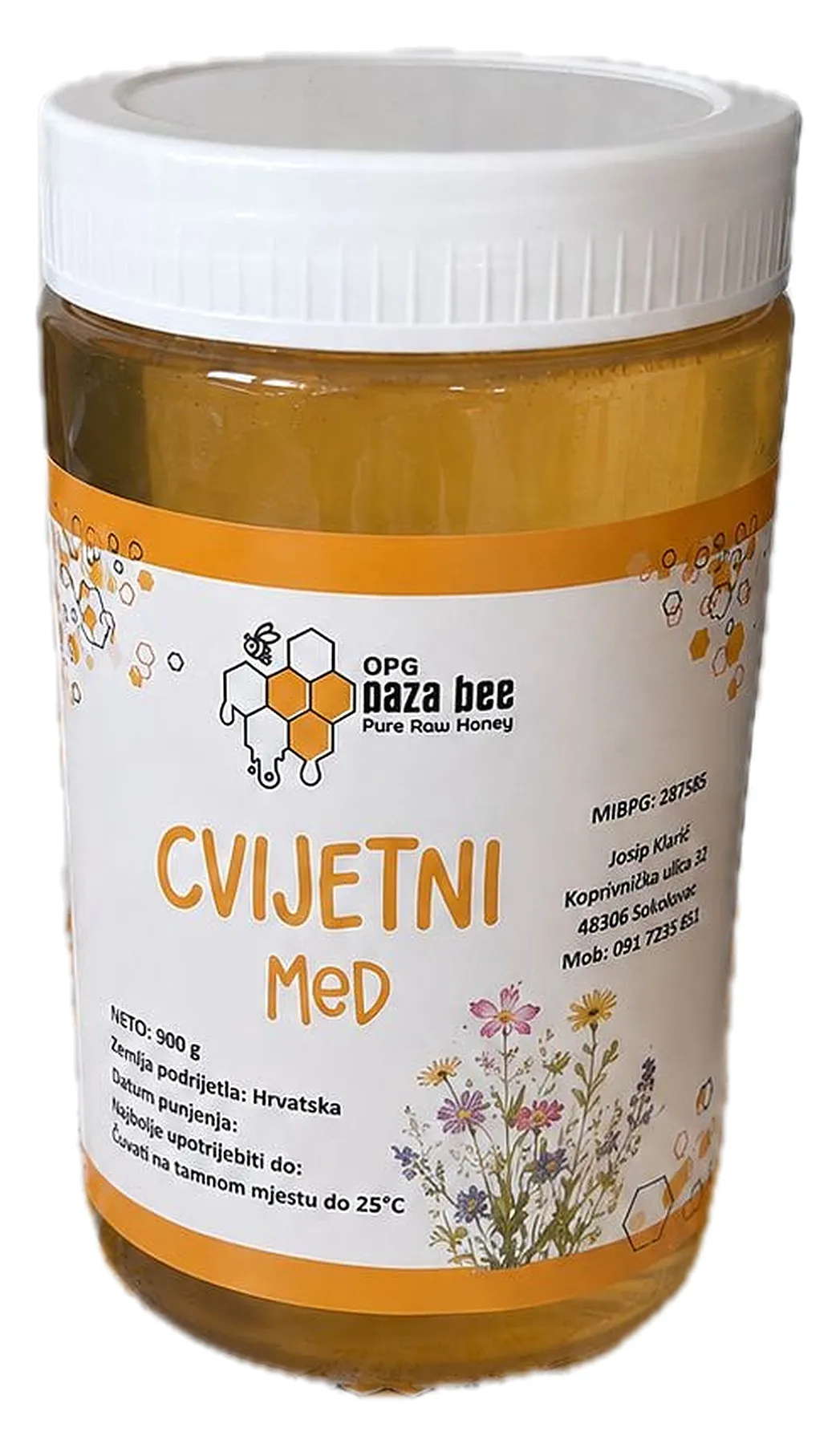
Wildflower honey is a broader description. It also comes from several floral sources, but they need not all grow in one meadow or flower within one short period. Fruit trees, shrubs, gardens, woodland edges and meadow flowers may all meet in the same jar while the bees are gathering nectar.
That is why the boundary is not always sharp. These two names do not promise an identical taste every time; they describe the main character of the forage.
How the flavours differ
Our wildflower honey is usually mild, rounded and versatile. It is an easy jar to put on the family table because it does not take over the whole meal. It works with bread, yoghurt, pancakes and drinks.
Meadow honey usually has a fuller herbal character. Its scent may recall a summer meadow, while the flavour can have more layers and a longer finish. That does not mean it will always be darker or stronger. A wet or dry season, earlier mowing and a different sequence of flowering can all change the result.
If you want to compare these with honeys where one plant leaves a clearer signature, see our guide to honey varieties.
Colour does not settle it
Both meadow and wildflower honey can range from pale yellow to deeper amber. A darker colour sometimes accompanies a stronger flavour, but it is not a reliable rule for identifying the variety. The scent, taste, label and a conversation with the beekeeper about that particular harvest tell us more.
This is why we enjoy letting customers taste two jars side by side. The difference no longer has to be found in a definition; it can be experienced directly.
How both honeys crystallise
Both honeys crystallise naturally. It may happen quickly or only after several months. The timing depends on the nectar in the honey, its balance of natural sugars, the temperature and how it is stored.
Crystallised meadow or wildflower honey is still the same honey, only with a different texture. Use it when creamy or soften it slowly in warm water. Our guide to honey crystallisation gives the practical details.
Which one should you choose?
- For the everyday family table: wildflower is an easy first choice.
- For a more pronounced herbal flavour: try meadow honey.
- For cooking and baking: both are versatile; choose according to whether you want a gentler or more noticeable aroma.
- For a gift: two smaller jars show the difference better than one large jar.
At our oasis we do not expect one year to repeat the last. Weather, flowering and the rhythm of the bees decide what reaches the jar. Our article on bee forage through the year tells that story in more detail.
In short
Meadow and wildflower belong to the same broad family of multifloral honeys, but their emphasis differs. Meadow points to the character of flowering grassland; wildflower reflects a wider variety of blossom forage. If you are undecided, taste both. Nature has already written the difference into their flavour.
Questions and answers
Are meadow and wildflower honey the same?
Both come from the nectar of many plants, so the boundary is not always sharp. Meadow usually emphasises flowering grassland, while wildflower describes varied blossom forage across the season.
Which is milder, meadow or wildflower honey?
It depends on the plants and the season. Wildflower honey is often mild and balanced, while meadow honey may have a fuller herbal flavour, but the next harvest can taste different.
Do meadow and wildflower honey crystallise?
Yes, both crystallise naturally. The speed and size of the crystals depend on the nectar that dominated, the balance of natural sugars and the storage temperature.
How do I choose between meadow and wildflower honey?
Choose wildflower for a mild, versatile everyday honey. If you want a fuller flavour reminiscent of a summer meadow, start with meadow honey; tasting them side by side is the best comparison.
Products from this article