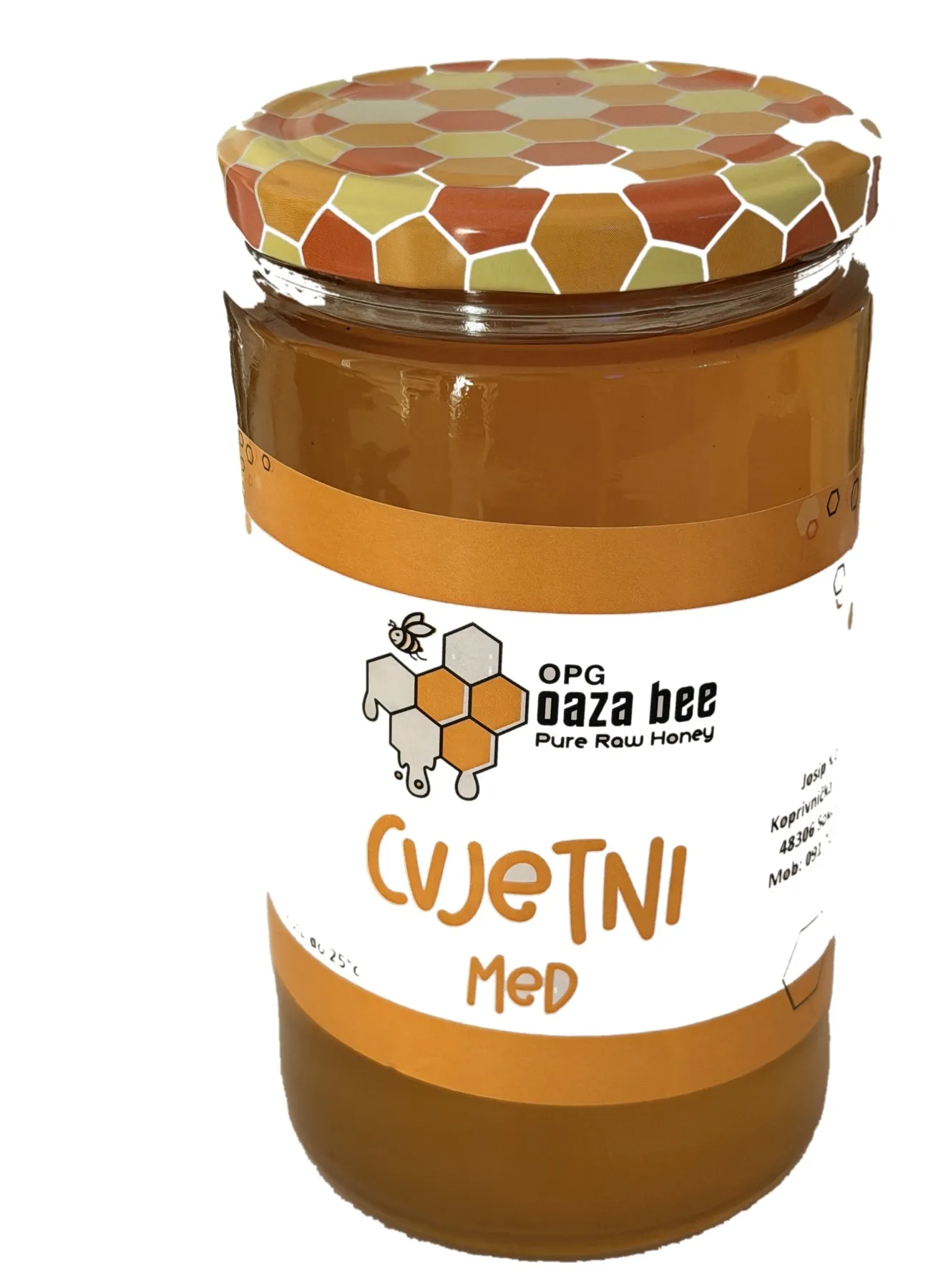
Types of honey in Croatia: acacia, linden, chestnut, meadow and wildflower honey
Acacia, linden, chestnut, meadow and wildflower honey: appearance, taste, crystallisation and pairings. A guide to choosing honey for tea, breakfast or a gift.
By AndrejaPublished 3 min read
Thanks to its varied landscape, Croatia produces more types of honey than most people realise. Each has its own colour, taste, way of crystallising and best use. This guide covers the five types that appear most often in our range and on shelves across the country.
How the different types of honey come about
The type of honey depends on which plants the bees collect nectar from. When one plant in flower dominates around the hive, the honey is named after it: acacia, linden, chestnut. When the bees collect from many different plants, we get wildflower or meadow honey.
The beekeeper influences this only through the location of the apiary and the timing of the extraction. Nature decides the rest, which is why the same type of honey differs from year to year. More on this in our article on bee forage in Podravina.
Acacia honey
- Appearance: light, almost transparent, golden yellow.
- Taste: mild, delicate, with a light floral note.
- Crystallisation: very slow; stays liquid for months or years.
- Who it is for: children, families, people who do not like a strong honey flavour.
- Pair it with: tea, yoghurt, pancakes, anything where you do not want the honey to dominate.
Acacia honey is the best-selling honey in Croatia and the best “first honey” for someone who does not otherwise eat honey. More about acacia honey.
Linden honey
- Appearance: light yellow to light amber, sometimes with a greenish tint.
- Taste: aromatic, with the unmistakable scent of linden blossom and a gentle menthol freshness.
- Crystallisation: medium pace, small crystals.
- Who it is for: lovers of aromatic honey.
- Pair it with: hot drinks, tea, breakfast.
Chestnut honey
- Appearance: dark amber to brown.
- Taste: intense, with a pronounced bitterness and a long finish.
- Crystallisation: slow.
- Who it is for: people who love strong flavours, with cheese and bread.
- Pair it with: hard cheeses, bread and butter, marinades.
Chestnut honey is a honey with character. Some people adore it, for others it is too bitter. More about chestnut honey.
Meadow honey
- Appearance: amber, darker than wildflower.
- Taste: full, rich, depending on the meadow plants in season.
- Crystallisation: fast, often into a creamy texture.
- Who it is for: lovers of traditional, “country” honey.
- Pair it with: bread, fresh cheese, cereals.
Wildflower honey
- Appearance: from light yellow to amber, depending on the season.
- Taste: balanced, medium intensity.
- Crystallisation: medium to fast.
- Who it is for: everyday use for the whole family.
- Pair it with: everything — tea, breakfast, cakes, drinks.
Wildflower honey is our “everyday honey”. It comes in a 900-gram jar, because it is the one that gets used up fastest.
How to choose
A simple rule:
- For tea: linden or acacia.
- For children: acacia.
- For breakfast: wildflower or meadow.
- With cheese: chestnut.
- As a gift: a combination of two types, for example acacia and chestnut, so the recipient can taste the difference.
Whatever the type, look for raw, unheated honey from a beekeeper whose name is on the label. We describe how to recognise it in how to recognise quality honey.
Conclusion
There is no best type of honey, only the honey that suits your taste and purpose. All the types in this guide come from our hives in Sokolovac and you can see them in our honey catalogue. If you are not sure, get in touch and tell us what you would use the honey with.
Questions and answers
What are the most common types of honey in Croatia?
The most common types of honey in Croatia are acacia, linden, chestnut, meadow and wildflower honey, and in some regions also sage honey, honeydew honey and rapeseed honey. The type depends on the plants that dominate around the apiary and on when they flower.
Which honey is the mildest?
The mildest honey is acacia: light, almost transparent, delicate in taste, and it stays liquid for a long time, which is why children and people who do not like a strong honey flavour choose it.
Which honey is best for tea?
For tea, the most common choices are linden and acacia honey. Linden adds its distinctive aroma, while acacia does not change the taste of the tea. Add honey to tea only once it has cooled to drinking temperature.
Which honey is the healthiest?
No type of honey is objectively the healthiest; all types of raw honey contain mostly natural sugars and small amounts of enzymes, minerals and pollen. What matters most is that the honey is raw, unheated and comes from a beekeeper you know.