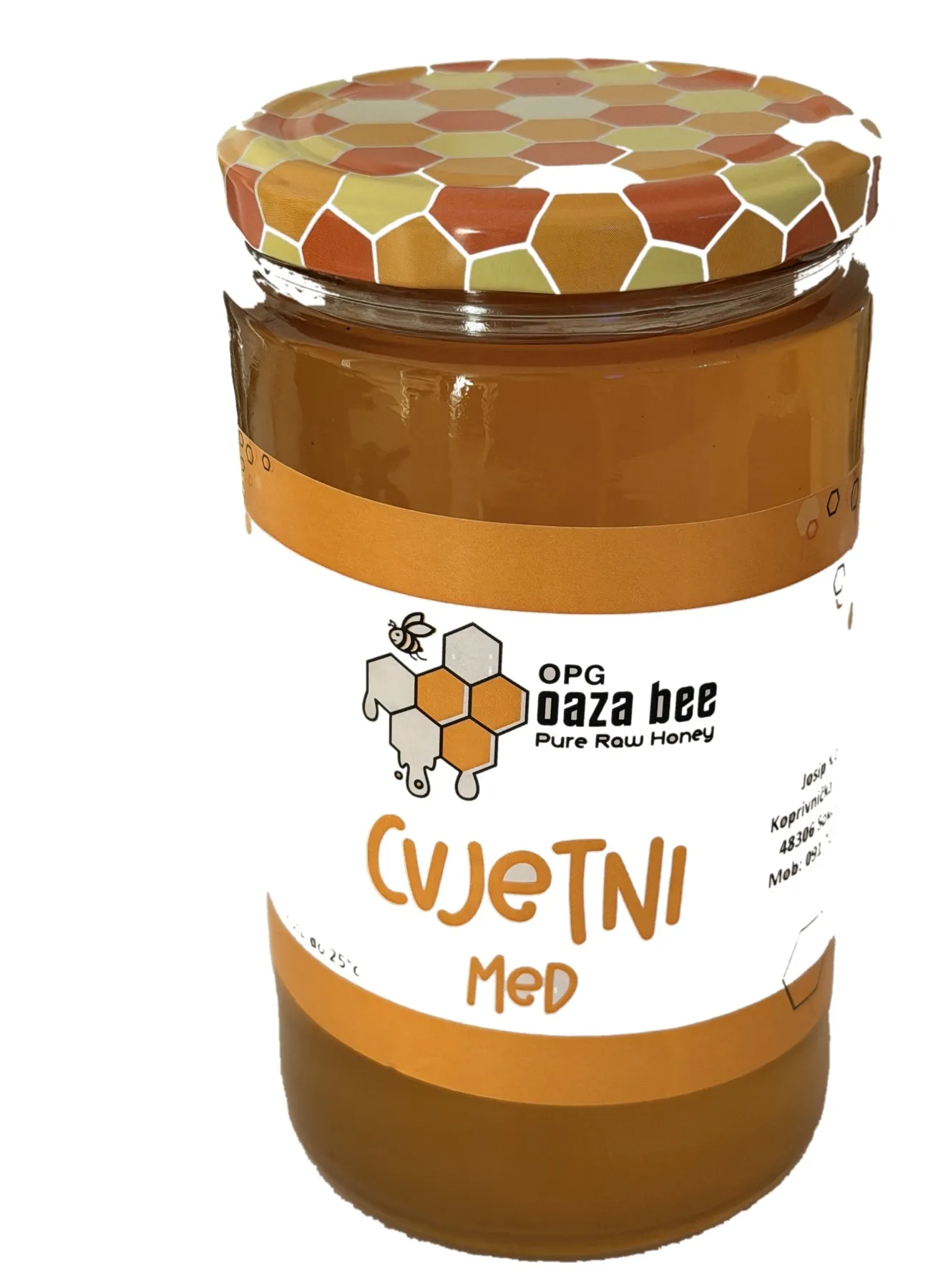
Acacia honey: the mildest honey, why it stays liquid and what to use it with
Acacia honey is pale, delicate and liquid for months. Where it comes from, why it crystallises slowly, why families choose it and how to spot the real thing.
By AndrejaPublished 3 min read
If chestnut honey is the honey for people who like strong flavours, acacia is its opposite: pale, delicate and discreet. It is the honey most people like best and the one that most often ends up in children’s cups. Here is what makes it that way.
Where it comes from
Acacia (black locust, Robinia) flowers at the end of April and in May. The flowering is short, ten to fifteen days, and sensitive to the weather: rain or frost at the wrong moment can ruin the whole acacia flow. That is why the amount of acacia honey varies so much from year to year, and in bad years there simply isn’t any. We write more about how forage shapes honey in our article on bee forage in Podravina.
There is plenty of acacia in Podravina, along the edges of woods, beside tracks and on neglected plots.
What it looks and smells like
- Colour: very pale, from almost transparent to pale gold.
- Scent: discreet, floral.
- Taste: mild, cleanly sweet, with a light note of acacia blossom and almost no aftertaste.
- Texture: liquid for months, often for years.
Why it stays liquid
Honey crystallises when glucose separates out into crystals. Acacia honey has relatively more fructose than glucose, so it crystallises very slowly. Acacia honey that is still liquid after a year is not a sign that it has been heated or adulterated; that is simply its nature. More on this in our article on honey crystallisation.
What to use it with
Acacia honey is “neutral”: it doesn’t change the taste of whatever you put it in. That makes it the most versatile honey in the kitchen.
- Tea and hot drinks. It sweetens without changing the flavour. Add it once the tea has cooled to drinking temperature.
- Yoghurt, porridge oats, pancakes. Children choose it most often.
- Cakes and ice cream. A sugar substitute that brings no aroma of its own.
- Salad dressings and marinades. With lemon and olive oil.
Acacia honey and children
Parents ask about acacia honey more than any other. Children eat it happily because of its mild taste, and because it stays liquid it is easy to measure out. An important note: honey is not given to children under 12 months, whatever the variety; that is general paediatric advice. For children over one year old, acacia honey is the usual choice.
How to recognise real acacia honey
- Very pale, almost transparent.
- Liquid, with no crystals, for months.
- Mild taste without a pronounced aroma.
- The beekeeper’s name and the place on the label.
A darker honey that crystallises quickly but is called acacia most likely contains other kinds of nectar too, which isn’t necessarily bad, but it isn’t pure acacia honey.
Conclusion
Acacia honey is the mildest and most versatile honey, the first choice for families and for anyone who doesn’t want honey to dominate. It stays liquid because that is how it is, not because it has been processed. Our acacia honey comes from the acacia groves of Podravina and you can see it here, and you will find a comparison with all the varieties in our guide to the types of honey.
Questions and answers
Why doesn’t acacia honey crystallise?
Acacia honey crystallises slowly because it contains relatively more fructose than glucose, and glucose is the sugar that forms crystals. That is why it stays liquid for months, sometimes years, which does not mean it isn’t raw.
Is acacia honey good for children?
Acacia honey is the most common choice for children over one year old because it is mild and does not overpower the taste of food. Honey is not given to children under 12 months, whatever the variety, in line with general paediatric advice.
What does acacia honey taste like?
Acacia honey is mild, gently sweet and almost without an aftertaste, with a light floral note. That is why it does not change the taste of the tea, yoghurt or cakes it is added to.
How do you recognise real acacia honey?
Real acacia honey is very pale, almost transparent, liquid and mild in taste, and the label carries the beekeeper’s name and the place of production. A darker or quickly crystallised honey labelled as acacia most likely contains other varieties too.