Perga or propolis: what is the difference and which to choose
Perga is fermented bee pollen you eat by the spoonful; propolis is the bee resin that protects the hive. The differences, uses and how to choose.
By AndrejaPublished 3 min read
Perga and propolis are two products from the same hive that people often confuse, even though they have almost nothing in common apart from where they come from. One is a food, the other a protective substance. Here is a simple comparison to help you decide which one you need.
What is perga
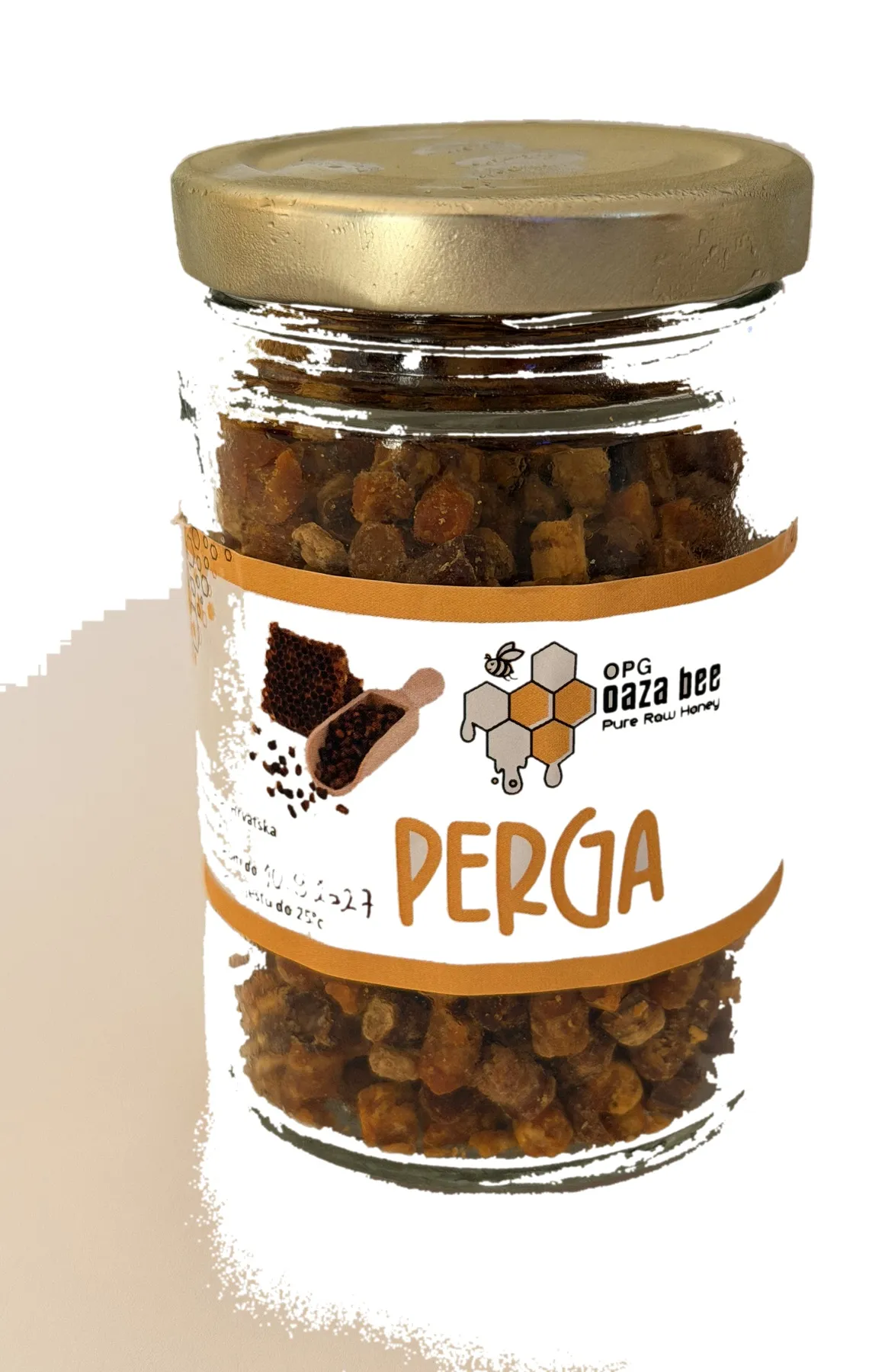
Perga, or bee bread, forms when bees pack bee pollen into the cells of the comb, cover it with honey and wax and let it ferment. It is food for the brood. For people it is a food product taken by the spoonful: a few pieces in the morning, with breakfast or with honey.
The taste is mildly tart and sweet, the texture firm, the colour from yellow to dark brown. We go into more detail in What is perga?.
What is propolis
Propolis is a resinous substance. Bees collect it from the buds and bark of trees, mix it with their own secretions and use it to seal cracks in the hive, protect it from damp and keep it clean. Thanks to propolis, the hive is one of the cleanest spaces in nature.
For people, propolis is not a food you eat by the spoon. It is bitter and resinous. Traditionally it is used as drops or a tincture, according to the instructions on the pack, as part of a home routine.
Side-by-side comparison
| Perga | Propolis | |
|---|---|---|
| What it is | fermented bee pollen | bee resin from tree buds |
| Role in the hive | food for the brood | protecting and sealing the hive |
| How it is used | eaten by the spoonful, with breakfast | drops or tincture, as directed |
| Taste | tart and sweet | bitter, resinous, aromatic |
| Amount in the hive | very small | small |
| Price | premium | more affordable |
How to decide
Ask yourself two questions.
Do I want something I eat, or something I use? If you are looking for a dietary supplement that goes into breakfast, that is perga (or bee pollen as a more affordable starting point). If you want a product for the home cupboard that you use now and then, that is propolis.
How much am I prepared to spend? Perga is a premium product, because the bees make little of it and it is taken out by hand. Propolis is more affordable.
Many of our customers keep both at home: perga for the morning routine, propolis for the cupboard. They do not rule each other out.
Who should not take either without advice
People with an allergy to pollen, bee stings or bee products, pregnant women and people with particular health conditions should consult a qualified professional before use. We cover this in more detail in our article on allergies to bee products.
Conclusion
Perga is a food, propolis is a protective substance. The first goes into breakfast, the second onto the shelf. Both come from our hives in Sokolovac: perga, 100 g and propolis. If you are not sure, write to us and describe what you are looking for.
Questions and answers
What is the difference between perga and propolis?
Perga is fermented bee pollen stored in the comb, so it is the food the bees give their brood and that people eat by the spoonful. Propolis is a resinous substance the bees collect from tree buds and use to seal and protect the hive, and people traditionally use it as drops or a tincture.
Can perga and propolis be taken together?
Yes, perga and propolis can be used on the same day because they play different roles: perga is part of breakfast, and propolis is used according to the instructions on the pack. People with an allergy to bee products should consult a qualified professional first.
Which is better for a beginner, perga or propolis?
For a beginner, propolis or bee pollen is simpler, because they are more affordable and slot into a routine more easily. Perga is for those who want a more special product from the hive and are prepared to pay a premium price.
What do perga and propolis taste like?
Perga is mildly tart and sweet and reminiscent of honey and dried fruit. Propolis is resinous, bitter and aromatic, so it is usually not eaten on its own but used as drops or a tincture.