Perga for athletes: how active people use it in their everyday diet
Why athletes and active people choose perga, how much to take, when and what to pair it with. Practical advice from the apiary, no miracle promises.
By AndrejaPublished 3 min read
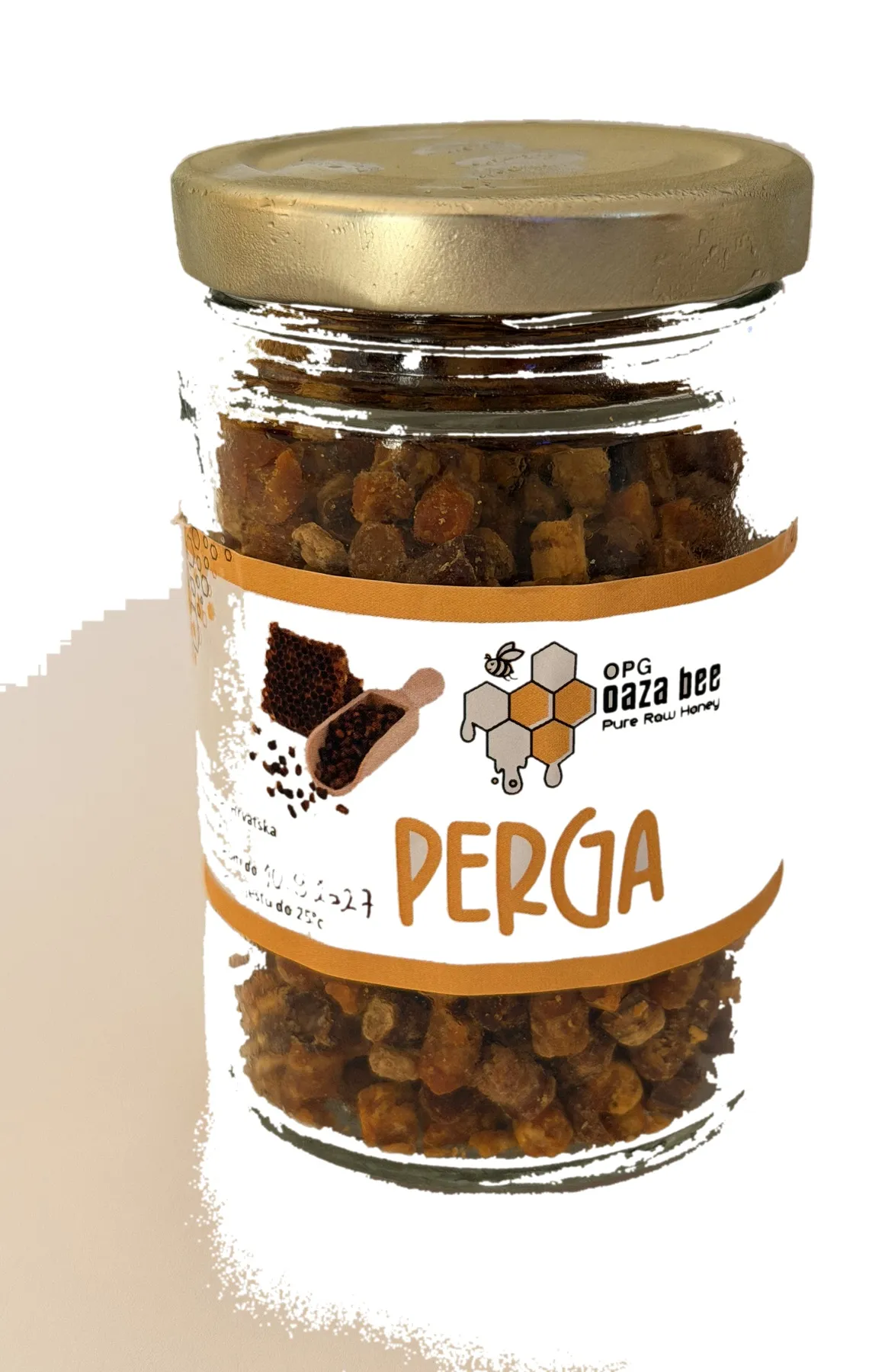
Perga (bee bread) is one of those products from the hive that active people ask about most often. No wonder: it is bee pollen that the bees have packed into the comb, covered with honey and left to go through a natural process of fermentation. The result is the food the bees give their brood, and something people have used as a dietary supplement for centuries.
In this article we are not promising faster personal bests. We explain what perga is, why athletes and recreational sportspeople choose it, how to take it and what to watch out for.
Why athletes choose perga in particular
Athletes and recreational sportspeople usually look for three things in a supplement: that it is natural, that it is simple to use and that it has a clear origin. Perga ticks all three boxes.
- A natural product with nothing added. Perga from the Oaza Bee hives is not heated, blended or enriched with anything. What you get in the jar is what the bees made.
- Nutrient-dense food. Like bee pollen, perga is naturally rich in protein, amino acids, vitamins and minerals. Fermentation in the hive changes its structure, which is why many people describe it as a “more digestible” version of bee pollen.
- A simple routine. A few pieces in the morning, no preparation and no equipment.
Athletes mostly use it during periods of heavier training, in the transitional seasons, or when they want a simple habit that is easy to keep up.
How to take it alongside training
There is no single right way, but these are the habits that prove simplest in practice:
- In the morning with breakfast. A few pieces of perga with yoghurt, porridge oats or on their own. This is the most common and easiest way.
- Before training. If you train in the afternoon, take perga 30 to 60 minutes beforehand, with a little food that is not hot.
- In cycles, not forever. Most people take perga for three to six weeks and then take a break. Regularity matters more than quantity.
For adults, beekeeping practice most often mentions one to two teaspoons a day, which is around 1 to 2 grams. When you first start, begin with a smaller amount to see how it suits you. Do not put perga in hot drinks.
What to pair it with
Perga goes well with the food athletes eat anyway:
- yoghurt or skyr — perga’s slightly tart taste fits in well
- overnight oats — add the perga in the morning, not the night before
- a spoonful of honey — the classic combination; wildflower or acacia honey softens the tart note
- a smoothie — only if it is cold or lukewarm
Some people use bee pollen instead of perga, or alongside it. The difference is that pollen is the raw material the bees bring into the hive, and perga is what it becomes inside the hive. If you are just starting out, bee pollen is the more affordable way in; perga is for those who want something a little more special.
What to watch out for
- If you are allergic to pollen or bee products, do not use perga without advice from a qualified professional.
- Perga is a food, not a medicine. It does not replace a balanced diet or recovery.
- Buy from a beekeeper you can ask where the perga comes from. Ours comes from our own hives in Sokolovac, and every jar says who stands behind it.
Conclusion
Perga is a simple, natural addition to an active person’s routine: a few pieces in the morning, regularly, in cycles. If you would like to get started, a 100 g jar of perga is enough for roughly one to two months of regular daily use, and the active lifestyle box combines perga with bee pollen and honey.
Questions and answers
When is the best time to take perga if I train?
The best time to take perga is in the morning with breakfast, or 30 to 60 minutes before training, in small amounts and regularly. Many recreational athletes take it every day for a cycle of a few weeks and then take a break.
How much perga a day do athletes take?
In beekeeping practice, the amount most often mentioned for adults is one to two teaspoons of perga a day, which is roughly 1 to 2 grams. When you first start, begin with half a teaspoon and see how it suits you.
Can perga be mixed into a protein shake?
Yes, perga can be added to a cold or lukewarm shake, yoghurt or porridge oats. Avoid hot drinks, because high temperatures are not ideal for delicate natural products like perga.
Is perga safe for athletes subject to doping control?
Perga is a natural food, fermented bee pollen, and contains no banned substances. Even so, any athlete subject to doping control should check every dietary supplement with a doctor or a qualified professional before using it.