Bee pollen: how to take it, how much, when and how to store it
How much bee pollen to take, when, what to mix it with, how to store it and who should be careful. A practical guide from the apiary.
By AndrejaPublished 3 min read
Bee pollen is the most accessible of the “unusual” products from the hive: it is easy to get hold of, simple to use and affordable. But precisely because it is so simple, people often use it wrongly: too much at once, in hot tea, from an open jar on a sunny windowsill. Here is how to use bee pollen properly.
What bee pollen is
Bees collect pollen from flowers, shape it into little balls with nectar and saliva, and carry it back to the hive in the “baskets” on their hind legs. The beekeeper collects some of those balls with a pollen trap at the hive entrance. Each ball is pollen from a single plant species, which is why bee pollen is so colourful: yellow, orange, red, brown, purple.
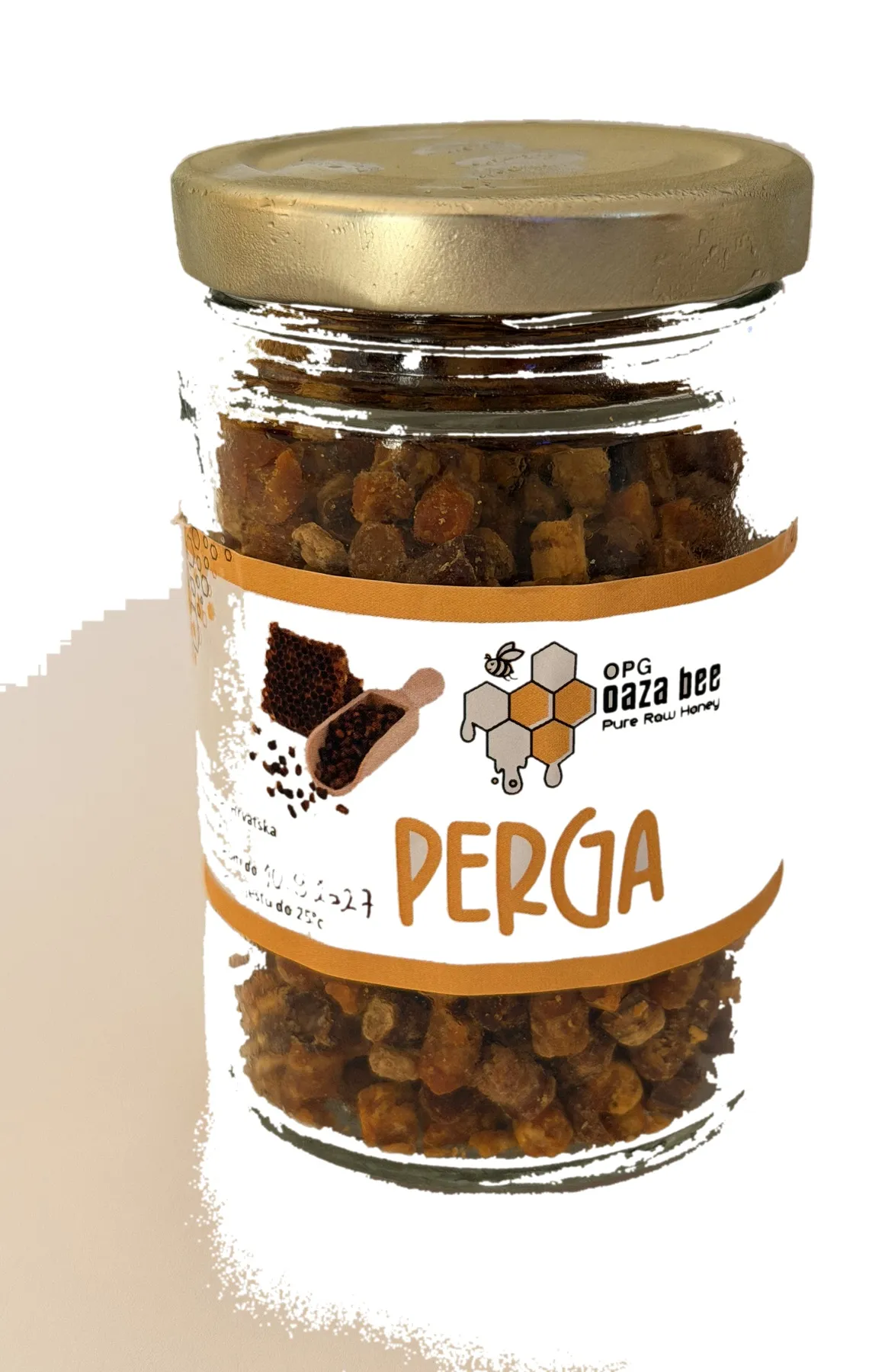
Bee pollen is the raw material for perga (bee bread). We explain the difference between the two in perga vs bee pollen.
How much
For adults, beekeeping practice most often mentions one to two teaspoons a day, about 5 to 10 grams.
How you start matters: the first time, take just a few granules and wait a day. If there is no reaction, increase gradually over the following days to half a teaspoon, then a full one. That way you will notice in time if pollen does not agree with you.
When
Most often in the morning, with breakfast, because it mixes most easily into what you are eating anyway. There is no rule about the time of day; regularity matters more. Most people take bee pollen for a few weeks or months, then take a break.
How to eat it
Bee pollen has a distinctive, slightly bitter, floral taste, and the dry granules are hard. Ways to make it more pleasant:
- Soaked overnight. Leave a teaspoon of pollen in yoghurt, milk or water; by morning the granules have softened.
- In porridge or muesli. Sprinkle it over porridge once it has cooled.
- In a smoothie. Cold or lukewarm.
- With honey. A spoonful of wildflower honey and a teaspoon of pollen is a classic.
Do not put pollen into hot tea or coffee; heat does not agree with it.
How to store it
- Fresh (undried) pollen contains a lot of moisture and spoils; keep it in the freezer, where it lasts for months, or in the fridge for a shorter period.
- Dried pollen is kept in a dry, dark place at room temperature.
- Always keep the container well sealed. Pollen absorbs moisture and smells.
- Not on the windowsill and not next to the cooker.
Our bee pollen is dried at a low temperature, so it keeps in the cupboard.
Who should be careful
- People with a pollen allergy. Bee pollen is pollen. If you have a pollen allergy, do not use it without professional advice. More in our article on allergies to bee products.
- People allergic to bee stings and bee products.
- Pregnant and breastfeeding women, and people with particular health conditions — talk to your doctor.
- Children — smaller amounts, and only after their first birthday.
Bee pollen or perga
If you have enjoyed bee pollen and want to go a step further, perga is bee pollen fermented in the comb: softer, slightly sour and more special. Bee pollen is an excellent start; perga is chosen by those who want something more. Both come from our hives, and the active lifestyle box contains both.
Conclusion
One to two teaspoons a day, in the morning, soaked or in porridge, starting gradually, with the jar sealed in the cupboard. If you are allergic to pollen, give it a miss. You can order bee pollen from our oasis through the catalogue.
Questions and answers
How much bee pollen should I take a day?
In beekeeping practice, adults most often take one to two teaspoons of bee pollen a day, which is about 5 to 10 grams. The first time, start with just a few granules to check how you tolerate it, then increase the amount gradually.
When is the best time to take bee pollen?
Bee pollen is most often taken in the morning with breakfast, because it mixes easily into yoghurt, porridge or a smoothie. There is no strict rule; what matters is taking it regularly.
How should bee pollen be stored?
Fresh bee pollen is kept in the freezer or fridge in a well-sealed container, and dried bee pollen in a dry, dark place at room temperature. In both cases keep the container closed, because pollen absorbs moisture.
Does bee pollen need to be soaked before eating?
It is not essential, but many people soak the granules overnight in yoghurt, milk or water, which makes them softer and more pleasant to eat. Pollen should not be put into hot drinks.