Learn · 18 May 2026
Perga and bee pollen — what is the difference?
Bee pollen is what the bees bring into the hive. Perga is what is made inside the hive. Here is what that looks like in practice.
These two products are often confused, but the difference is actually simple.
Bee pollen is the raw material bees collect from plants and carry into the hive. The beekeeper collects it with a “pollen trap” at the hive entrance — the bees leave some of the pollen pellets from their legs behind as they enter. That is why bee pollen comes as small, loose, colourful pellets in different shades, depending on the plants.
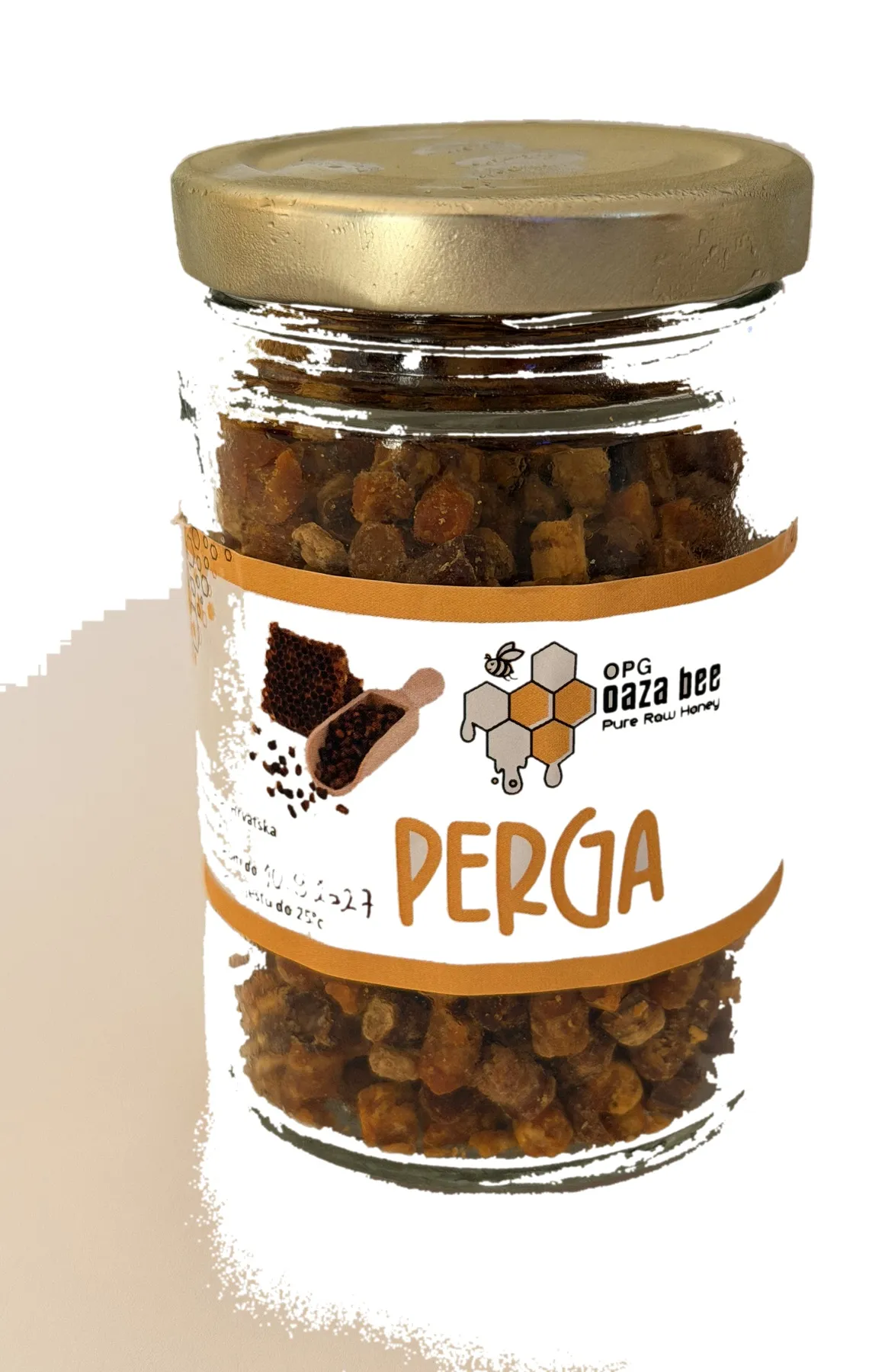
Perga forms when the bees pack that pollen into the comb, cover it with honey and wax, and it goes through a natural process inside the hive. Perga is removed from the comb — which is slower and more demanding than collecting pollen — so it comes in the form of darker, firm hexagonal pieces.
Put simply
- bee pollen is what the bees bring into the hive
- perga is what is made inside the hive after a natural process
How they differ in practice
| Bee pollen | Perga | |
|---|---|---|
| How it forms | bees collect it from plants | bees pack it into the comb, where it ferments |
| Appearance | colourful, loose pellets | darker, firm “tablets” from the comb cells |
| Taste | floral, slightly bitter | sweet-sour, reminiscent of honey and dried fruit |
| Amount per hive | larger | much smaller |
| Price | more affordable | premium |
That is why perga has a different structure, a different character and a special place among hive products. Both come from our hives — bee pollen is a great start for people just discovering the bee world, and perga is for those who want something more special.