Raw honey: what unheated and unfiltered mean and how to spot it on the shelf
Raw honey is neither heated nor finely filtered. What that preserves, how to tell it apart from industrial honey and what the labels mean.
By AndrejaPublished 3 min read
“Raw honey” is a term you see on labels more and more often, and hardly anyone explains what exactly it means. It isn’t defined in law, so everyone uses it their own way. This is our explanation: what we mean by raw honey, what it preserves and how to recognise the difference yourself.
What raw honey is
Raw honey is honey that, after extraction:
- has only been coarsely strained through a sieve to remove bits of wax and any impurities,
- has not been heated above the temperature inside the hive, around 35 to 40 degrees,
- has not been finely filtered under pressure through filters that remove pollen and fine particles,
- has not been blended with other honey to make it uniform.
In other words, raw honey is what the bees make, moved from the comb to the jar with as little intervention as possible.
What heating and filtering change
The industry heats honey for practical reasons: warm honey is thinner, easier to bottle and pump, and crystallises more slowly on the shelf. Fine filtering removes the pollen particles around which crystals form, so the honey stays clear.
The price is that some of what people buy honey for is lost:
- Enzymes the bees added to the nectar are sensitive to heat.
- Aroma fades; heated honey becomes more uniform and flatter in taste.
- Pollen, by which honey can be identified and which is part of its nature, disappears.
Heated and filtered honey is neither bad nor dangerous. It is simply less of what it was in the hive.
How to recognise raw honey
There is no single reliable test at home, but there are signs:
- It crystallises. Raw honey, apart from acacia and chestnut, sets hard over time. Wildflower honey that is still perfectly clear and liquid after a year has probably been heated.
- It isn’t perfectly transparent. Slight cloudiness, tiny bubbles and the odd wax particle on the surface are normal.
- It has aroma. A scent that gives away the type of honey and is reminiscent of blossom or woodland.
- The beekeeper answers questions. The surest sign. Ask whether the honey has been heated and filtered. An honest beekeeper knows the answer.
We write more about recognising honey quality in general in our article on how to recognise quality honey.
Labels and markings
In Croatia, raw honey is not a separate legal term. On the label, look for:
- the type of honey (acacia, wildflower, chestnut…),
- the producer’s name and address — a specific beekeeper, not just “packed for”,
- the country of origin; “blend of EU and non-EU honeys” means you know nothing about where it came from,
- the words “organic” or “bio” only if the beekeeper is certified.
How we do it
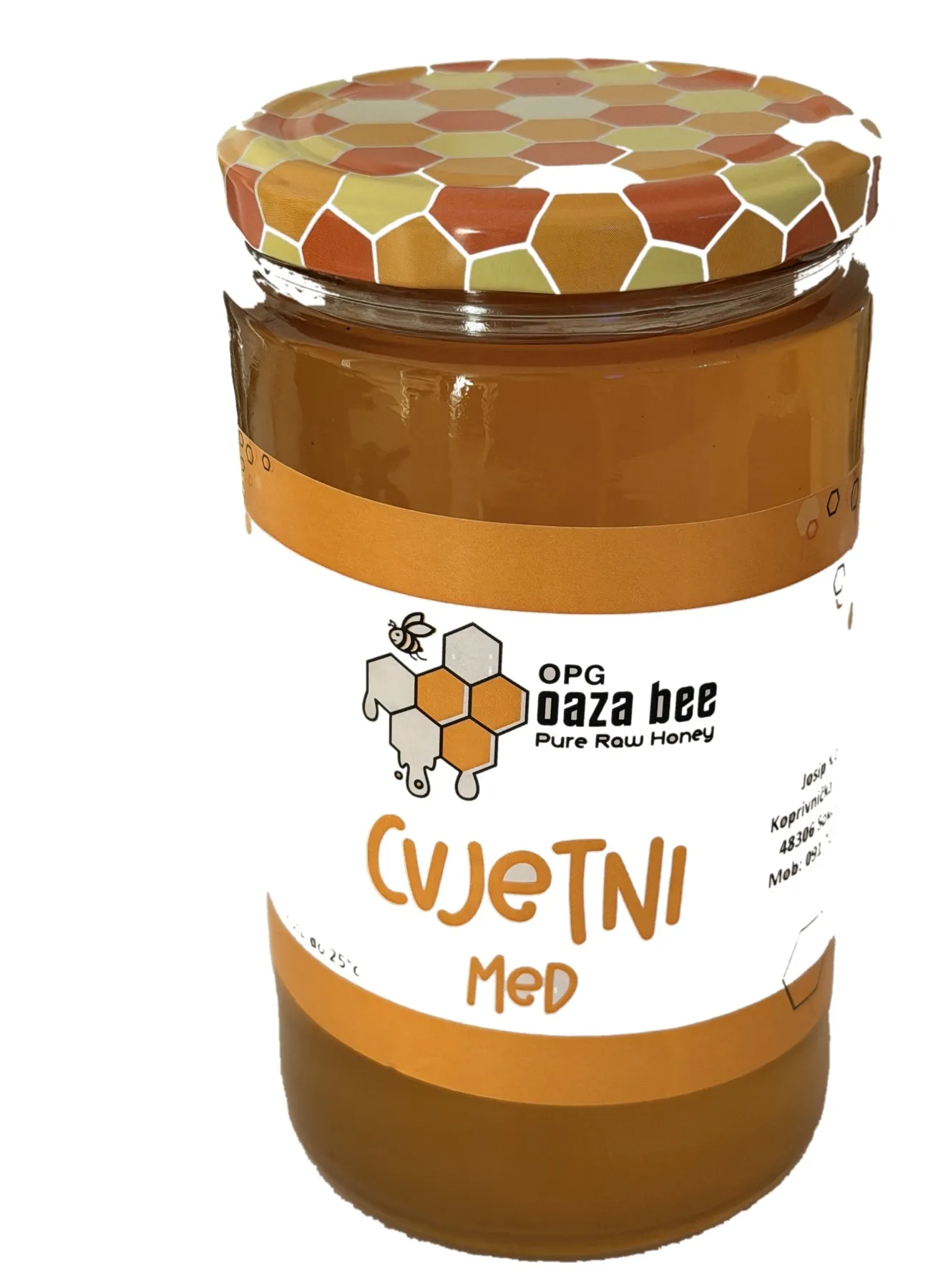
At Oaza Bee we extract honey when it is ripe, strain it through a sieve and bottle it in glass. We don’t heat it and we don’t filter it finely. That is why our wildflower and meadow honeys crystallise while our acacia stays liquid; each according to its nature. We write about how to store honey so it keeps those properties in our article on how to store honey.
Conclusion
Raw honey is honey without heating, fine filtering or blending. You recognise it by crystallisation, aroma and a beekeeper who can tell you where it came from. If that is the honey you want, take a look at our range of honey or ask us anything you like about the way we work.
Questions and answers
What does raw honey mean?
Raw honey is honey that, after extraction, has only been coarsely strained to remove bits of wax and has not been heated above the temperature inside the hive, around 35 to 40 degrees. That way it keeps its fine pollen particles, enzymes and full aroma.
Is all local honey raw?
Most honey that beekeepers sell directly is raw, but that is not a rule; some beekeepers heat honey to make it easier to bottle or to delay crystallisation. The safest thing is to ask the beekeeper whether the honey has been heated and filtered.
How do you recognise raw honey on the shelf?
Raw honey crystallises over time, is often slightly cloudy, may have tiny bubbles or wax particles on the surface and has a pronounced aroma. Perfectly clear honey that is still liquid after a year has usually been heated and finely filtered.
Is raw honey safe?
Raw honey is safe for adults and for children over one year old. Honey is not given to children under 12 months, whether raw or processed, in line with general paediatric advice.